(Originally published on July 21, 2025)
Table of Contents
- A Letter from the Abstractionist
- Banana Bikers of Burundi
- Q&A: What Are Particles?
- Book Excerpt: How Energy Works
- Join the Movement
1. A Letter from the Abstractionist
Dear Reader,
This edition of The Practice is the Win™ brings two new stories. Alone Together and Train to Kalambaka can be read separately, but together they open the clearest path yet into the world beneath the one we think we inhabit.
The Baroness and the Abstractionist was our first story about Red Space and Blue Space. It worked, but it was compact. Closer to parable than story.
To fix that, Alone Together introduces a new Nimbin, a boy who finds a yellow door and steps into the Kingdom of How Things Happen. The surface world stays the same. Nimbin changes. He now sees where things actually happen.
Train to Kalambaka shows how people stay separated. Each person lives in their own red house. Their Red Space. Built on shared Blue Space foundations they can’t sense. Nimbin learns to see both layers through the Puppet King’s Opera Glasses, but that’s just for him. Everyone else has to find their own door.
For kids, these are adventures. For adults, they’re reminders that connection doesn’t require changing anything except how we see.
Also this month: Banana Bikers of Burundi explores how the Biological Blindfold works on the most dangerous roads in the world. Plus a note sparked by recent conversations on LinkedIn: What Are Particles? and a book excerpt, How Energy Works.
The roads we ride, the doors we find, the questions we ask.
Welcome to the Blue Space.
Founder and CEO
General Reality Media, LLC
2. Banana Bikers of Burundi
(Originally published here.)
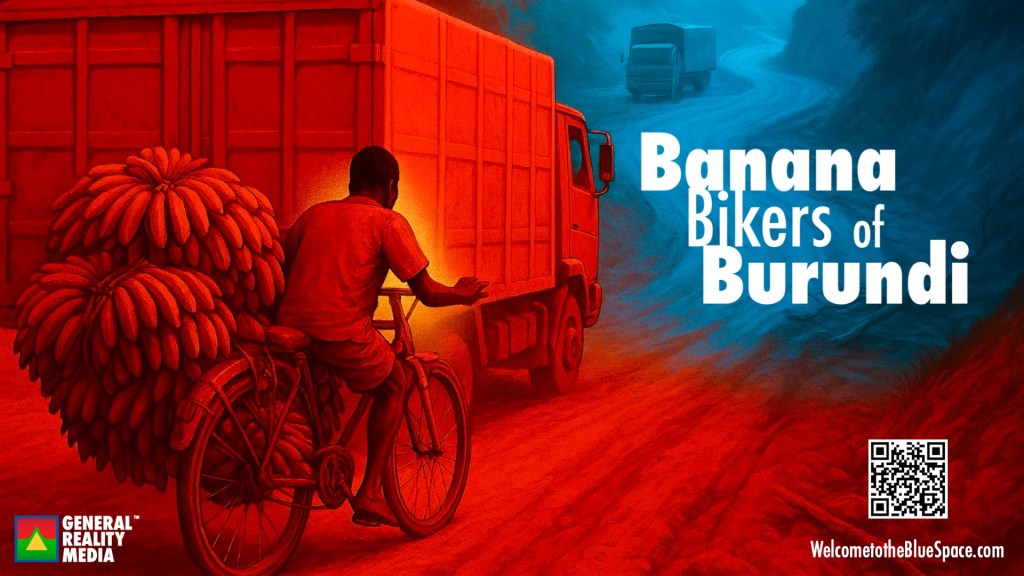
In Burundi, riders carry massive loads of produce (often bananas) by bicycle across mountainous terrain that would defeat most vehicles. To make it uphill with this crushing weight loaded onto their bikes, they grip the backs of passing trucks and let themselves be pulled.
These roads are among the most dangerous in the world, partly because they navigate from a place where they can’t see what’s coming.
“𝘛𝘩𝘦 𝘳𝘰𝘢𝘥 𝘥𝘰𝘦𝘴𝘯’𝘵 𝘤𝘢𝘳𝘦 𝘸𝘩𝘢𝘵 𝘐 𝘴𝘦𝘦.
𝘐 𝘤𝘢𝘯’𝘵 𝘴𝘦𝘦 𝘵𝘩𝘦 𝘤𝘶𝘳𝘷𝘦, 𝘰𝘳 𝘵𝘩𝘦 𝘴𝘵𝘢𝘭𝘭𝘦𝘥 𝘤𝘢𝘳 𝘢𝘩𝘦𝘢𝘥, 𝘰𝘳 𝘵𝘩𝘦 𝘣𝘳𝘢𝘯𝘤𝘩 𝘵𝘩𝘢𝘵’𝘴 𝘫𝘶𝘴𝘵 𝘧𝘢𝘭𝘭𝘦𝘯.
𝘐’𝘮 𝘨𝘳𝘪𝘱𝘱𝘪𝘯𝘨 𝘢 𝘣𝘢𝘳 𝘸𝘦𝘭𝘥𝘦𝘥 𝘵𝘰 𝘵𝘩𝘦 𝘣𝘢𝘤𝘬 𝘰𝘧 𝘢 𝘵𝘳𝘶𝘤𝘬, 𝘤𝘭𝘪𝘮𝘣𝘪𝘯𝘨 𝘶𝘱𝘩𝘪𝘭𝘭 𝘸𝘪𝘵𝘩 200 𝘬𝘪𝘭𝘰𝘴 𝘰𝘧 𝘣𝘢𝘯𝘢𝘯𝘢𝘴 𝘴𝘵𝘳𝘢𝘱𝘱𝘦𝘥 𝘵𝘰 𝘮𝘺 𝘧𝘳𝘢𝘮𝘦.
𝘞𝘦’𝘳𝘦 𝘯𝘰𝘵 𝘴𝘶𝘱𝘱𝘰𝘴𝘦𝘥 𝘵𝘰 𝘣𝘦 𝘩𝘦𝘳𝘦.
𝘕𝘰 𝘰𝘯𝘦 𝘪𝘴.
𝘉𝘶𝘵 𝘩𝘦𝘳𝘦 𝘐 𝘢𝘮.
𝘛𝘩𝘦𝘳𝘦 𝘢𝘳𝘦 𝘳𝘶𝘭𝘦𝘴, 𝘰𝘧 𝘤𝘰𝘶𝘳𝘴𝘦.
𝘕𝘰 𝘩𝘢𝘯𝘨𝘪𝘯𝘨 𝘰𝘯 𝘵𝘰 𝘵𝘳𝘶𝘤𝘬𝘴.
𝘕𝘰 𝘩𝘰𝘭𝘥𝘪𝘯𝘨 𝘵𝘩𝘳𝘰𝘶𝘨𝘩 𝘵𝘩𝘦 𝘪𝘯𝘤𝘭𝘪𝘯𝘦.
𝘜𝘯𝘵𝘪𝘭 𝘺𝘰𝘶 𝘵𝘳𝘺 𝘱𝘶𝘴𝘩𝘪𝘯𝘨 𝘵𝘩𝘢𝘵 𝘸𝘦𝘪𝘨𝘩𝘵 𝘣𝘢𝘳𝘦𝘧𝘰𝘰𝘵.
𝘍𝘳𝘰𝘮 𝘣𝘢𝘤𝘬 𝘩𝘦𝘳𝘦, 𝘵𝘩𝘦 𝘳𝘰𝘢𝘥 𝘪𝘴 𝘪𝘯𝘷𝘪𝘴𝘪𝘣𝘭𝘦.
𝘐 𝘧𝘦𝘦𝘭 𝘵𝘩𝘦 𝘣𝘶𝘮𝘱𝘴.
𝘐 𝘩𝘦𝘢𝘳 𝘵𝘩𝘦 𝘦𝘯𝘨𝘪𝘯𝘦 𝘴𝘵𝘳𝘢𝘪𝘯.
𝘐 𝘩𝘢𝘷𝘦 𝘯𝘰 𝘪𝘥𝘦𝘢 𝘸𝘩𝘦𝘳𝘦 𝘸𝘦 𝘢𝘳𝘦, 𝘰𝘳 𝘸𝘩𝘢𝘵 𝘸𝘢𝘪𝘵𝘴 𝘱𝘢𝘴𝘵 𝘵𝘩𝘦 𝘯𝘦𝘹𝘵 𝘴𝘦𝘤𝘰𝘯𝘥.
𝘛𝘩𝘦 𝘥𝘳𝘪𝘷𝘦𝘳 𝘴𝘦𝘦𝘴 𝘸𝘩𝘢𝘵’𝘴 𝘢𝘩𝘦𝘢𝘥, 𝘫𝘶𝘴𝘵 𝘦𝘯𝘰𝘶𝘨𝘩.
𝘞𝘩𝘦𝘯 𝘩𝘦 𝘴𝘸𝘦𝘳𝘷𝘦𝘴, 𝘩𝘦 𝘵𝘦𝘭𝘭𝘴 𝘮𝘦 𝘵𝘩𝘦 𝘴𝘵𝘰𝘳𝘺 𝘢𝘧𝘵𝘦𝘳 𝘵𝘩𝘦 𝘧𝘢𝘤𝘵.
𝘛𝘩𝘦 𝘸𝘩𝘺 𝘤𝘩𝘢𝘯𝘨𝘦𝘴.
𝘛𝘩𝘦 𝘩𝘰𝘸 𝘪𝘴 𝘢𝘭𝘸𝘢𝘺𝘴 𝘵𝘩𝘦 𝘴𝘢𝘮𝘦.
𝘚𝘰𝘮𝘦𝘵𝘩𝘪𝘯𝘨 𝘩𝘢𝘱𝘱𝘦𝘯𝘦𝘥 𝘪𝘯 𝘢 𝘸𝘰𝘳𝘭𝘥 𝘐 𝘤𝘩𝘰𝘴𝘦 𝘯𝘰𝘵 𝘵𝘰 𝘴𝘦𝘦.
𝘈𝘯𝘥 𝘵𝘩𝘢𝘵’𝘴 𝘢𝘭𝘭 𝘪𝘵 𝘵𝘢𝘬𝘦𝘴.
𝘉𝘶𝘵 𝘪𝘧 𝘐 𝘩𝘰𝘭𝘥 𝘰𝘯, 𝘐 𝘮𝘪𝘨𝘩𝘵 𝘨𝘦𝘵 𝘴𝘰𝘮𝘦𝘸𝘩𝘦𝘳𝘦.
𝘈𝘯𝘥 𝘵𝘩𝘢𝘵’𝘴 𝘸𝘰𝘳𝘵𝘩 𝘵𝘩𝘦 𝘨𝘢𝘮𝘣𝘭𝘦.
𝘌𝘷𝘦𝘳𝘺 𝘵𝘪𝘮𝘦.”
The difference between the Burundi banana biker and us?
He chooses his blindfold.
The End.
👉 The Abstractionist’s Papers, Chapter 1, Chapter 2, and Chapter 3.
3. Q&A: What Are Particles?
Particles are how we package happenings into discrete concepts.
The universe offers continuous causal activity. From within our minds we build models to track recurring behaviors. We learn to recognize patterns that resist overlap and others that reinforce and align, and we give them names for practical use.
But these are processes; patterns of influence we’ve learned to label as objects. Properties like spin or charge are real because they represent consistent behaviors from these processes. How we categorize them depends on our interpretative framework.
The idea of a particle proves useful in many contexts, but it’s not a truth of nature so much as a truth of modeling.
Nobody has ever photographed an individual electron because electrons are processes, not discrete objects.
What we measure are consistent responses to electromagnetic engagement: causal behaviors that maintain their patterns across interactions. The world operates through dynamic processes.
Particles are how these processes appear when transformed through human interpretation.
👉 The Abstractionist’s Papers, Chapter 6: A Natural Theory of Light
4. Book Excerpt: How Energy Works
You push a cart up a hill. At the top, you let it go. It rolls down.
The cart at rest holds potential energy. This readiness lives in the interpretative models of the processes (e.g., atoms) we call “cart,” a condition maintained within their relationship to the gravitational field. When you observe the cart rolling downhill, what you see as “motion” is your mind’s interpretation of causal activity happening in the Blue Space.
Because of the Biological Blindfold, we can’t observe causation directly. We can only interpret its effects. What we call “kinetic energy” is how we model the causal activity that’s actually occurring.
The cart’s potential becomes motion, but motion can also accumulate back into potential. A rolling ball can compress a spring, water flowing downhill can be pumped back up. The relationship works in both directions.
But where was the cart’s potential energy before you pushed it uphill? After it stops rolling, where does the kinetic energy go?
Follow the energy backward—from the cart to your muscles, from your muscles to the food you ate, from that food to photosynthesis, from photosynthesis to the sun. Follow it forward—from the rolling cart to friction, from friction to heat, from heat to molecular motion that spreads outward indefinitely. The trail never ends because energy isn’t located anywhere. It’s not a substance that moves from place to place.
Energy is how we describe the relationship between what processes hold internally and what they express through interaction. The “potential energy” exists only in our model of how the cart relates to the gravitational field. The “kinetic energy” exists only in our interpretation of the causal activity we observe as motion.
This same pattern appears everywhere. A battery’s voltage represents interpretative readiness that becomes current. A spring’s tension becomes motion. A mind’s intention becomes action. And in each case, flow can accumulate back into readiness: current can charge a battery, motion can compress a spring, action can build intention.
What we call energy describes the relationship between interpretative conditions and causal activity, two orthogonal domains that connect without merging.
👉 The Abstractionist’s Papers, Section 4.3.6
4. Join the Movement
The Abstractionist Movement propagates one conversation at a time. When something here helps you see a situation differently or opens a new door, share it. When someone asks how you found clarity or stayed grounded, tell them.
The Abstractionist’s Papers is available free at WelcometotheBlueSpace.com. Subscribe to The Practice is the Win™ and join a growing community in the practice of Natural Reality.
 The Abstractionist’s Papers