(Originally published on October 1, 2024.)
Table of Contents
- Welcome 📜 Letter
- 🧠 Quotes of the Month
- Book 📚 Recommendation
- 🎤 Interview with Our Founder
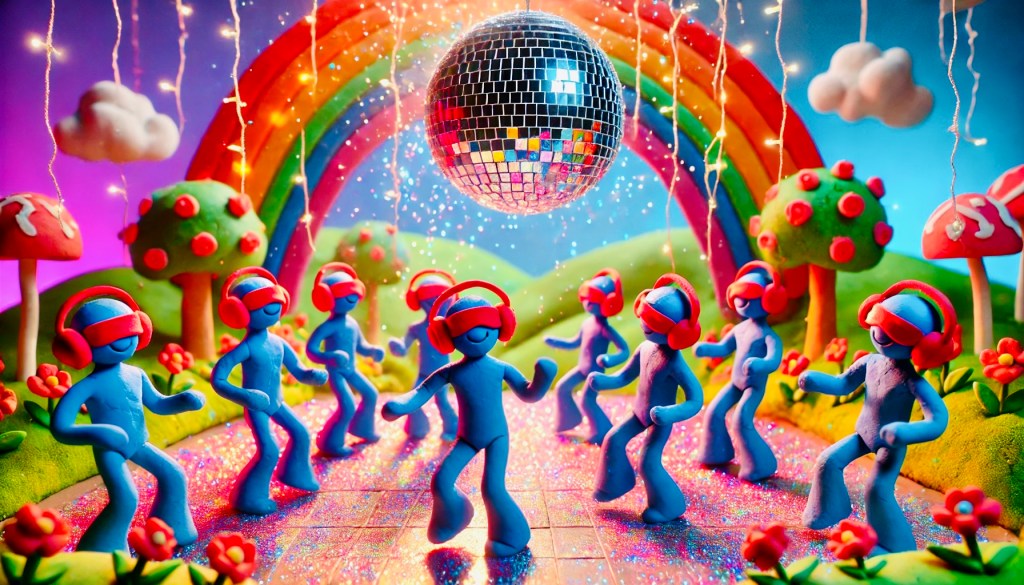
- Thira & Zilker: Silent 🎧 Disco
- Weekly 🛠 Practice
- Storytime: Lemonade 🍋 Hero
- Join 🔗 the Abstractionist Movement
1. Welcome 📜 Letter
Welcome to the first edition of The Practice is the Win™.
This newsletter is more than just pixels on a screen; it’s a living, breathing experiment in understanding and practice.
Our goals are threefold: to build a community around Abstractionism, to provide some guidance to those interested in practicing Natural 🌈 Reality, and to continue to develop our upcoming books. Together, we’ll explore how abstract concepts can be transformed into real-world experiences.
Inside, you’ll find a mix of sections that cover different aspects of this journey. There are quotes to inspire, book recommendations, and whimsical stories like Thira & Zilker, where complex ideas come to life in creative ways. We’ve also included weekly practice exercises for you to experiment with in your life.
This month’s feature explores Silent Disco as a metaphor for how we each perceive the world in our own unique way—like dancing to a rhythm no one else can hear. It’s a fun, interactive experience that shows how much of reality we filter through our senses and minds.
We realize this inaugural newsletter is probably on the longer side, but don’t worry—we don’t expect you to read it all. We just hope there’s something in here for you. If not, please let us know!
In future editions, we’ll explore topics such as Paradoxes, Incoherence, Natural Reality, the Biological Blindfold, and Emergence—likely key chapters in our upcoming book. As we experiment with new ideas, we expect our newsletter format to change.
Whether you’re new to Abstractionism or have been with us for a while, we’re thrilled to have you here. Together, let’s blend theory with practical application and build a curious, thoughtful space.
Best regards,
Luiz von Paumgartten
Founder and CEO
General Reality Media, LLC
2. 🧠 Quotes of the Month
Each edition starts with a few thought-provoking quotes to set the tone and inspire reflection. These selections resonate with the key themes of Abstractionism and Natural Reality, encouraging new perspectives and deeper thinking.
“The Universe is under no obligation to make sense to you.” – Neil deGrasse Tyson, Astrophysics for People in a Hurry
This quote reminds us that the universe operates on its own terms, independent of our understanding or expectations. It challenges us to remain humble and curious, recognizing the limits of our perception.
“You do not rise to the level of your goals. You fall to the level of your systems.” – James Clear, Atomic Habits
A stark reminder that the systems we build around our habits and daily practices define our growth. It’s not about reaching for the stars if the ladder’s broken—it’s about building a sturdy ladder step-by-step.
“Realize deeply that the present moment is all you have. Make the Now the primary focus of your life.” – Eckhart Tolle, The Power of Now
This quote touches on the essence of balance. While we need to reconcile the past and prepare for the future, staying rooted in the present helps us find inner peace. It’s a reminder to focus on the balance that works for us.
3. Book 📚 Recommendation
From time to time, we might recommend a book that explores the philosophical and intellectual ideas at the heart of Abstractionism and Natural Reality. These books are selected for their ability to expand your thinking and open new perspectives.
This month’s selection is The Outer Limits of Reason by Prof. Noson Yanofsky, a book that has been a significant inspiration for us. It explores the limits of human logic, covering fascinating topics like Gödel’s incompleteness theorems, paradoxes, and quantum mechanics. Prof. Yanofsky makes you question how much of reality we can actually grasp, and how much will always remain just beyond our understanding.
One of the most thought-provoking ideas in the book is that paradoxes exist only in our minds—not in the universe itself. Yet, since our minds are part of the universe, this raises deep questions about the nature of thought and reality. This insight has had a profound impact on our work, especially as we develop Principles of Natural Reality.
We highly recommend The Outer Limits of Reason to anyone interested in exploring the edges of human logic and the mysteries that lie beyond. It’s a thought-provoking read that invites you to push your understanding of reality.
Thought for the Month: Can paradoxes exist in the mind but not in the universe? What does that tell us about the nature of reality and our place in it? The answer will be explored in future newsletters—stay tuned!
4. 🎤 Interview with Our Founder
This section of the newsletter offering insights into the characters, stories, and concepts from The Abstractionist’s Papers. You’ll get to know Thira, Nimbin, Zilker, and other key figures, as well as hear from special guests and other writers we may invite to share their perspectives. This time, we begin with our founder. Luiz von Paumgartten reflects on the journey that led to the creation of General Reality Media, the evolution of Abstractionism, and his vision for the future. From the writing of The Baroness and the Abstractionist to the development of Natural Reality, he shares how his personal experiences shaped the movement and how it continues to grow.
Q: What inspired the creation of General Reality Media, and what was the journey like from those initial blog posts to where it is today?
LvP: It all started as a way for me to make sense of life and communicate what I felt was important to my kids after a difficult divorce. They were young at the time, and I wrote with the hope that one day they’d catch that long pass when the time was right.
In 2017, I began blogging, playing around with sketches and concepts that didn’t really fit into my work as a patent attorney. Over time, that evolved into what we now call Abstractionism and Natural Reality.
But to be honest, those early attempts were rough—really rough! Looking back, some of it was laughably bad. There wasn’t some grand plan in the beginning—just a need to get thoughts out of my head and explore ideas that felt scattered and disjointed.
The first big turning point was The Baroness and the Abstractionist. It’s a short story that’s deceptively simple but packed with concepts like paradoxes, incoherence, and layers of reality. Unpacking it became a long project of its own.
Fast forward six years, and along came BoxLilly, a spontaneous story I created for my granddaughter on a lazy Sunday morning, using a cardboard box to explain perspective. It was a pivotal moment—realizing that anyone could write a children’s book!
Over time, these small explorations grew into a larger framework, which I now call Abstractionism and Natural Reality. It wasn’t a straight path, but rather a trail of breadcrumbs I followed without knowing where they’d lead. And yet, here we are.
Q: You mentioned The Baroness and the Abstractionist as a turning point. What was it about that story that sparked such a shift in your thinking, and how did it influence your future work?
LvP: The story is simple on the surface, but it contains layers upon layers of ideas. It was the first time I realized that stories could be used as a tool to unpack bigger concepts like paradoxes, Incoherence, and how we navigate different layers of reality.
Writing The Baroness showed me that this type of storytelling—where you can talk about complex ideas without making it feel heavy—was the key to unlocking Abstractionism for a wider audience.
The “book” is very brief, and honestly, that’s intentional—at the time, I figured readers had plenty of other things to dive into, so why stretch it out? Still, despite its simplicity, this was the spark that set everything in motion. It was the true starting point for all that followed.
Q: With the upcoming release of Principles of Natural Reality and the shift toward long-form content, what would you say is the core message you hope to convey through these new formats?
LvP: Right now, we’re in a phase of “purposeful emergence,” if I may call it that. We’re shifting from frequent LinkedIn articles to more long-form content like this newsletter and the upcoming book, Principles of Natural Reality. It’s a way to consolidate all these concepts—Abstractionism, Paradoxes, Incoherence, the Biological Blindfold—into something more structured and comprehensive.
The core message is that these ideas, when put together, can help people make sense of the world and their place in it. I want readers to see how everything is connected and to feel empowered by understanding the frameworks that shape our reality.
It’s not just theory—these are practical tools for navigating life.
Q: Balancing your career as a patent attorney with the creative exploration of Abstractionism seems challenging. How do you manage to keep both worlds alive?
LvP: I’m fully committed to my private practice as a patent prosecutor, but what started as a creative outlet in General Reality Media has now grown into a real startup company.
Balancing both worlds has been challenging but fulfilling.
Luckily, it all comes down to thinking and writing, thinking and writing, so in terms of habits, the two blend relatively well into my routine. I work on General Reality Media from 5:00 AM to 6:00 AM every morning, get my 9-year-old ready for school, and then spend the rest of my time at the law firm.
Aside from daily routines, one thing feeds into the other—they resonate with each other. My legal work informs the structure and discipline behind Abstractionism, while the deep thinking inherent in this type of writing has become a branding asset in my legal career. Clients tend to appreciate attorneys who can think critically and creatively.
Q: Looking to the future, you’ve hinted at expanding into areas like augmented reality and cognitive interfaces. Can you share more about the technologies you’re developing at General Reality Systems and how they connect to your work on Natural Reality?
LvP: We’re working on ways to quantify Abstractionist Models and apply them to real-world challenges. I’ve also launched a sister company, General Reality Systems, LLC, to develop patent-pending technologies inspired by Natural Reality and the Biological Blindfold. These innovations focus on creating tools that integrate augmented reality (AR), artificial intelligence (AI), and metaverse technologies.
We’ve got a few projects in the works that could reshape how we interact with the world around us—especially through interfaces designed to help people better understand their own minds. It’s all about bringing these abstract concepts into practical, everyday applications.
Q: What excites you most about the potential of applying Abstractionist Models to real-world problems? Do you have any specific fields in mind where these ideas could have the biggest impact?
LvP: The potential is enormous!
Abstractionist Models can help us see patterns and relationships in ways we haven’t before. I think there’s huge potential in fields like AI, where understanding complex, layered systems is critical. There’s also huge potential in education, where these models can help students learn to think in more interconnected and holistic ways.
Ultimately, it’s about providing new tools for innovation. Whether we’re talking about developing new technologies or solving age-old human problems, the possibilities are endless.
5. Thira & Zilker: Silent 🎧 Disco
You’ve arrived at the part of our newsletter where Thira, the Fairy of Emergence, and Zilker, The Abstractionist, find themselves in one unusual adventure after another. Today’s story involves a silent disco, a bit of confusion, and a lot of dancing. Enjoy the chaos.
The Setting
A cozy workshop nestled in the Pacific Northwest forest. The Toy Maker’s Model, a complex contraption of gears, levers, and tiny blue puppets, stands at the center, surrounded by sketches, notes, and the occasional spilled cup of tea. Outside, the misty forest is bathed in the soft glow of twilight.
The Cast
- Thira – The Fairy of Emergence in the forest, known for giving squirrels wings and encouraging a bit of delightful chaos. She has a sign in her home that reads, “Avoid Reality at All Costs,” a philosophy she’s lived by since long before meeting Zilker.
- Zilker (The Abstractionist) – A philosopher-wizard with more theories than practical solutions. He’s working tirelessly to perfect a special toy for Nimbin’s birthday, driven by the hope that it will not only delight the child but also serve as a tool for his own ongoing research into the nature of reality.
The Play
The Great Puppet Predicament
“But I don’t want to go among mad people,” Alice remarked. “Oh, you can’t help that,” said the Cat: “we’re all mad here. I’m mad. You’re mad.” — Alice’s Adventures in Wonderland by Lewis Carroll
Zilker is pacing in front of the Toy Maker’s Model, his brow furrowed in concentration. The tiny blue puppets, meant to mimic human behavior, are instead engaging in an elaborate, synchronized stumble.
“Nimbin’s birthday is in two days,” Zilker mutters, gesturing to the chaotic scene. “And this—” he gestures at the chaotic scene, “—this is what I have to show for it.”
He sighs, massaging his temples. “I’ve tried logic, persuasion, even interpretative dance. Nothing.”
Thira appears, floating effortlessly, her expression equal parts amusement and curiosity. She glances at the sign above their fireplace. “Reality giving you trouble?” she asks, deadpan.
Zilker narrows his eyes at her. “Reality always gives me trouble.”
A Slightly Ridiculous Suggestion
Thira hovers above the Model, her wings shimmering softly. “You need a break. There’s a silent disco in the clearing tonight. It’s weird and pointless—perfect for clearing your head.”
Zilker raises an eyebrow. “A silent disco? As in dancing with no music?”
“Exactly,” she replies, pleased with her own logic. “No sound, just people grooving to their own tunes. It’s like your reality theories, but with better outfits.”
He considers this, the corner of his mouth twitching. “It sounds absurd.”
“Good,” she says with a finality that makes it clear she won’t take no for an answer.
Zilker, recognizing the inevitable, nods. “Alright, let’s go.”
Dancing Through Layers
The clearing is awash with moonlight and twinkling lights, the ground alive with the gentle thrum of creatures moving to their own invisible rhythms. Fairies and magical beings glide through the space, each wearing luminescent headphones.
Thira hands Zilker a pair. “Each channel is like a different version of the world. You’re always talking about layers—now you can dance through them.”
Zilker flips through the channels. Each one transforms the clearing in subtle, surreal ways. One channel softens everything into a dreamlike blur; another sharpens every detail to a crisp, almost hyper-real clarity. He hesitates, then starts to move, his steps uncertain at first but loosening with each shift in perspective.
“This is actually rather… refreshing,” he admits, attempting a slightly ridiculous spin.
Thira, dancing nearby, catches his eye. “See? Sometimes, you don’t need to add anything. Just dance through it.”
He smiles, letting the music—or rather, the absence of it—guide him through the layers of reality, each channel offering a new way of seeing the world around him.
An Unexpected Insight
They sit down on a large stone, catching their breath. The forest hums around them, vibrant with life, though there’s no audible sound.
“I’ve been trying so hard to make these puppets act like humans,” Zilker says, looking at Thira. “But maybe that’s not what they’re supposed to do. Maybe they’re just meant to… exist in their own way.”
Thira’s smile is soft, understanding. “Sometimes, things don’t need to make sense to be beautiful. You’re always trying to make everything fit into a neat little box.”
Zilker nods, feeling a strange lightness. “I suppose it is. And maybe the puppets don’t need to be more human—they just need to be themselves.”
As the clearing glows softly around them, the unspoken understanding between them feels like a shared melody, as if they’re both dancing through life’s layers without needing to fix or change what simply is.
Back at the Workshop
Back at the workshop, Zilker approaches the Toy Maker’s Model with a renewed sense of curiosity. He tweaks a few gears, adjusts a lever, and then, with a flourish, sets the puppets in motion.
This time, they move in a strange, delightful dance, each puppet following its own rhythm. They aren’t walking or talking like humans, but they seem alive in their own unique way.
Thira watches from the doorway, her presence calm and steady. “They’re not perfect, but they’re interesting.”
Zilker nods, a soft smile playing on his lips. “Interesting is good.”
He turns to her, and for a moment, there’s nothing but the quiet, easy space they share—no expectations, just acceptance. “Thank you.”
“For what?”
“For reminding me that sometimes, the best things are the ones we don’t try to change.”
Thira steps closer, her gaze warm. “Sometimes, it’s better to just be.”
They turn back to watch the puppets, content in the shared quiet.
A Subtler Dance
Now in their cozy home, the “Avoid Reality at All Costs” sign still hangs prominently above the fireplace. Thira and Zilker move slowly through their space, no music needed, just the quiet rhythm of being together.
Their dance, subtle and unspoken, is an expression of love that needs no words. It’s not about being perfect, but about being present for each other—holding space, even when reality feels too big or too small.
/End.
About Silent Disco
Silent disco isn’t just quirky fun—it’s a powerful metaphor for the Biological 🙈 Blindfold we all wear. From birth, we experience life not directly, but through the filters of our senses, thoughts, and emotions.
At a typical dance, the music is carried through vibrations in the air, creating a shared experience for everyone. But at a silent disco, there’s a trick being played: we see people dancing, but the air around us is still. Each person is in their own world of music, isolated by their headphones. It’s a perfect illusion, mirroring how we navigate reality. We think we perceive the world directly, but like at the silent disco, what we experience is shaped by our internal “headphones”—our thoughts, memories, and emotions. These are the filters of the Blindfold.
When we walk through life without the “headphones” of deeper empathy or insight, we don’t get access to anyone else’s reality. We just see what they do with their own private soundtrack—the outward actions shaped by their inner world. We never hear their music, just witness the way it makes them move. This is how the Blindfold limits us—we assume we’re seeing the whole picture, but we’re really only catching glimpses of the effects, not the causes.
The beauty of the silent disco is that it invites us to notice this separation. It offers us a way to experiment with our own reality by switching channels, tuning into new perspectives, and observing how our internal world changes. Once we recognize the Blindfold for what it is—a filter through which we see and interpret the world—we can start to play with it. We are the DJs of our own lives, choosing how we interpret reality, which track we dance to, and how we interact with the rhythms around us.
Now, imagine if we could take this even further. With Augmented Reality (AR), we could create a world where we shift between layers of reality at will, exploring new perspectives in real-time. Hidden patterns, emotional connections, and the invisible mechanisms shaping our world would come into focus—reminding us that reality is layered, interconnected, and always ready to be explored from a new angle.
6. Weekly 🛠 Practice
Each month, we’ll provide exercises and thought experiments designed to challenge your perception and deepen your understanding of Natural Reality and Abstractionism.
Week 1: Seeing Beyond the Image
Objective: Learn to distinguish between your perception of an object and the object itself.
Instructions:
- Find a tree or another object outside. Observe it closely.
- Now close your eyes and imagine the tree in your mind. What does it look like? What details are missing?
- Open your eyes again and note the differences between the image in your mind and the tree in front of you.
- Reflect on how your mind constructs the image of the tree. Remember, the processes we call “tree” belong to the Causation Domain (external world), while a visual image of those processes belongs to the Interpretative Domain (internal world).
Takeaway: This exercise helps us realize that everything we perceive exists in our mind, even though it appears to be out there. Understanding this distinction is a foundational step in practicing Natural Reality.
Week 2: Word-Play Experiment
Objective: Explore how meaning evolves through layered definitions.
Instructions:
- Pick a word that’s obscure or has multiple meanings, like “bivouac.”
- Write down the first definition you find. Reflect on what this word means to you now.
- Now, look for a more nuanced definition or a different context for the word. How has your understanding changed?
- Finally, research a historical or specialized usage of the word. How does this new information transform its meaning for you?
Takeaway: The processes that give rise to what we call “pixels on a screen” or “ink on paper” exist in the Causation Domain, but the meaning we assign to those pixels resides in the Interpretative Domain. That meaning can evolve as we interact with it, even though the pixels or ink remain unchanged.
Week 3: Emotional Awareness Practice
Objective: Recognize the difference between “caused by” and “in response to.”
Instructions:
- Think of a recent situation where you felt offended or upset.
- Break down the event into two parts: what happened (the stimulus) and your response.
- Ask yourself: Was my response “caused by” the event, or was it “in response to” my interpretation of the event?
- Reflect on how different responses might change the outcome. Could delaying your reaction have made a difference?
Takeaway: This exercise helps us take control over our reactions by understanding that while external events may trigger feelings, our responses are under our control. It’s about creating a balance between causation (external events) and interpretation (our responses).
Week 4: Complementary Opposites
Objective: Identify and understand how seemingly opposite concepts can work together.
Instructions:
- Think of two things that are typically seen as opposites, like “chaos and order” or “freedom and discipline.”
- Write down how they are different from each other and why they are often seen as incompatible.
- Now, think about situations where these opposites actually complement each other. For example, chaos can lead to creative breakthroughs, and discipline can turn creative ideas into reality.
- Reflect on how understanding this complementarity can change your perspective on other “opposites” in your life.
Takeaway: By recognizing the interplay between complements, we learn to see the dynamic balance that exists in nature. This understanding is crucial for navigating complex situations and making sensible decisions.
7. Storytime: Lemonade 🍋 Hero
The Storytime section is where we revisit an engaging, child-friendly tale that reflects key principles of Natural Reality and Abstractionism. These stories help children explore the difference between thoughts, feelings, and actions in a ful and relatable way.
Lemonade 🍋 Hero is a story about Nimbin and Vail, two friends who decide to open a lemonade stand. But this isn’t just any lemonade stand—it’s an adventure in understanding the difference between two worlds: the world of “How I Feel” and the world of “What We Do.” Throughout the story, Nimbin and Vail encounter various challenges, from deciding on prices to handling customers who want everything for free.
In the end, they learn that the world of “How I Feel” (their thoughts, emotions, and perceptions) can sometimes be at odds with the world of “What We Do” (the actions they need to take to run their business successfully).
Exploring Deeper Themes:
Here’s how we can explore deeper themes from the story with our children:
- Discuss the Two Worlds: Explain the difference between the world of “How I Feel” and the world of “What We Do.” How can emotions influence decisions in the real world?
- Role-Playing: Act out different scenarios with your child where they have to make decisions while feeling happy, sad, or frustrated. How do their feelings change their choices?
- Problem-Solving: Ask your child how Nimbin and Vail could handle challenging customers differently. What would they do if they were in Nimbin and Vail’s shoes?
- Creativity Exercise: Encourage your child to create their own story where they have to balance their feelings with what they need to do. How do they handle conflicts between “How I Feel” and “What We Do”?
Conclusion: A key lesson of Lemonade Hero is helping children understand that while feelings are important, they don’t have to dictate every decision. By recognizing and balancing their emotions with practical actions, they can navigate both personal and external challenges more effectively.
8. Join 🔗 the Abstractionist Movement
We invite you to join us in exploring Abstractionism—a way of understanding the complexities of the world and our place within it. Through our articles, stories, and exercises, we aim to build a community of thinkers and doers dedicated to expanding the boundaries of thought and reality.
Here’s how you can get involved:
- Induce Your Ideas: Have a concept for an article, exercise, or story? We’re always looking for contributions that deepen Abstractionist thinking.
- Join the Discussion: Comment on articles, participate in exercises, and share your experiences. Your insights matter!
- Spread the Word: If you enjoy what you’ve read, share it with others. The more people who engage, the richer our collective understanding becomes.
All our content is available for free on The Abstractionist’s Papers. We believe in making knowledge accessible, so explore, download, and share. If you have feedback or suggestions, we’d love to hear from you.
This is just the beginning. Future editions will dive deeper into key themes of Abstractionism, such as Zilker’s discoveries, the hidden layers of reality, and the Biological Blindfold—how our senses filter everything we perceive. We’ll also explore Emergence, the complexity that arises from simple interactions.
Subscribe, share, and stay tuned as we continue to explore these themes!
🚧 The End 🚧
To continue exploring these ideas and practice transforming challenges into growth, subscribe to The Practice is the Win™, and join a community dedicated to embracing the practice of Abstractionism, navigating the dual-domain framework, and becoming active shapers of our own experiences.
 The Abstractionist’s Papers